Case study
hatchfellow.
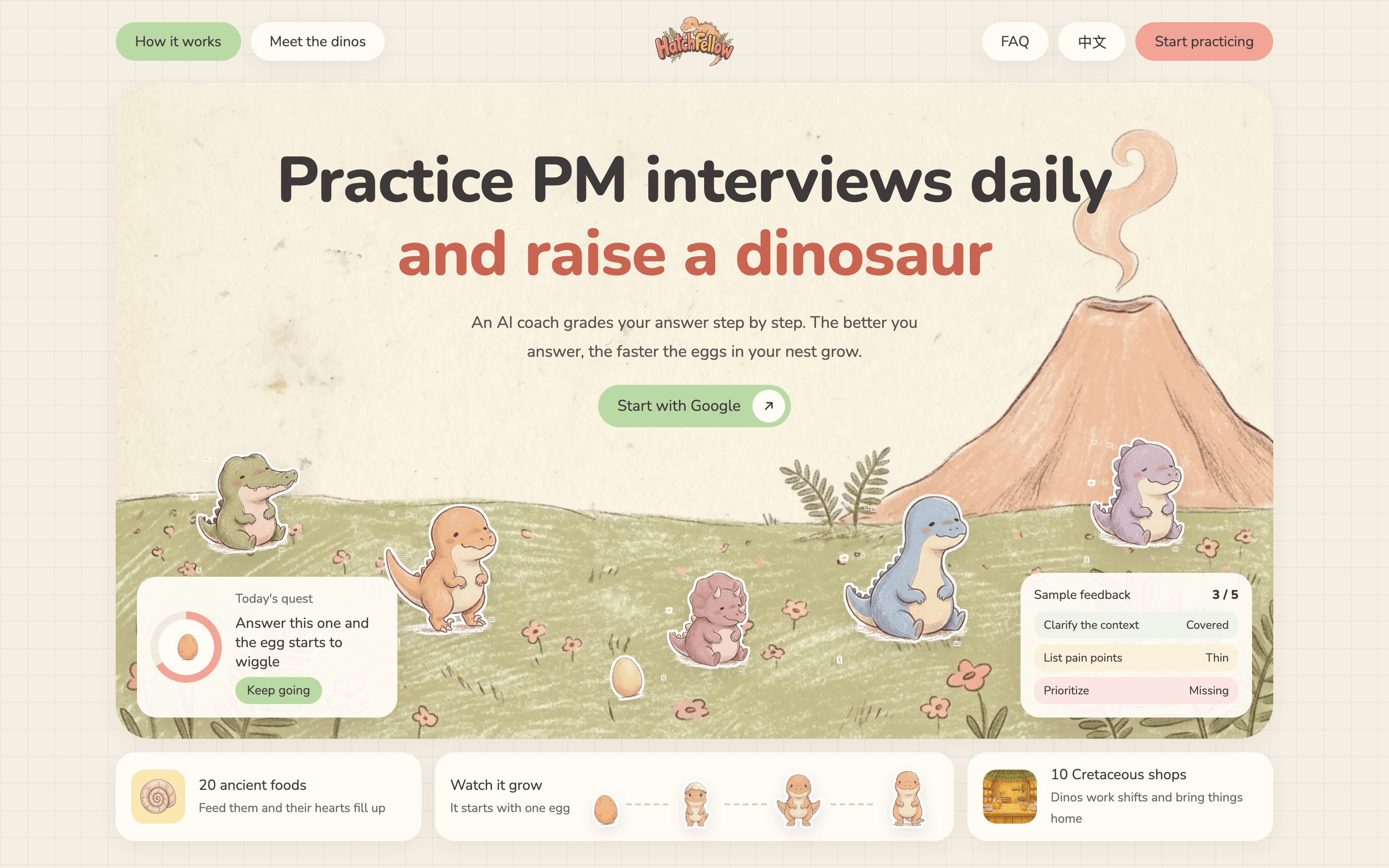
Helps PM candidates practise interviews every day. Daily questions come with the points to hit, AI grades against those points, and baby dinosaurs hatch and grow as you keep showing up.
- Role
- Solo: research, product, design & build
- Type
- Gamified practice app (PWA)
- Status
- Live at hatchfellow.com
My role
I did this alone. I ran the research (my own practice as user zero, a market scan, a competitor analysis and conversations with job-hunting PMs), wrote the PRD, made the product and design calls on this page, built the app with AI coding tools and shipped it to hatchfellow.com.
The spark
I know how to do the work on the job. Interviews are a different skill: compressing what you know into short, clear answers takes a lot of practice and a lot of reviewing frameworks. Practising with people every day helped, but when an unfamiliar question came up I got nervous, over-explained my decisions, and sometimes forgot which framework to reach for.
The problems to solve
- P1
Knowing the job isn't answering well under pressure
Under pressure the knowledge is there but the answer comes out long and unstructured. Research (my own habits as user zero, a market scan, a competitor analysis and conversations with PMs job-hunting now) set the persona: a PM in an active search who knows the job but struggles to answer concisely under pressure, and the build started from myself.
- P2
Daily practice works, but nothing brings you back
Practising with AI every day worked; sticking with it didn't, because nothing pulled me back. Collecting skins in Honor of Kings was genuinely fun, which raised the question of what would happen if practice gave you something to collect. That idea became the baby dinosaurs.
- P3
The reward must appeal in Taiwan and the US
Preferred visual styles differ a lot between Taiwan and the US, but a Japanese-style look is a taste both share, so the dinosaurs are warm and hand-drawn. Collectible series like Jellycat and Pop Mart's Labubu showed that once a series drops, people want the full set, and the collection design follows that behaviour.
- P4
A fixed question bank keeps repeating itself
The first version rotated a small hard-coded bank, and repeated questions were the main complaint. Practice also needs a clear bar for what a strong answer covers, or grading has nothing to measure against.
HatchFellow tries to teach like an interview-prep tool and bring you back like a gamified-learning app, for PM interviews specifically.
How it works
- 01
Fresh questions, never repeated
Each morning a scheduled routine has Claude write the day's questions across case study, AI product and behavioural categories. Before writing, it pulls the question history, so nothing comes back that I've already been asked.
SolvesP1P4
- 02
Points to cover, graded point by point
Every question ships with three to five points a strong answer has to hit. Grading checks the answer against each point, then gives a score, coaching notes and a model answer.
SolvesP1P4
- 03
A retry queue for weak answers
Low-scoring questions come back after a cool-down, flagged as a review, alongside what I said last time and what the coach asked for. They graduate once I answer them well.
SolvesP1
- 04
Answers earn coins; coins raise dinosaurs
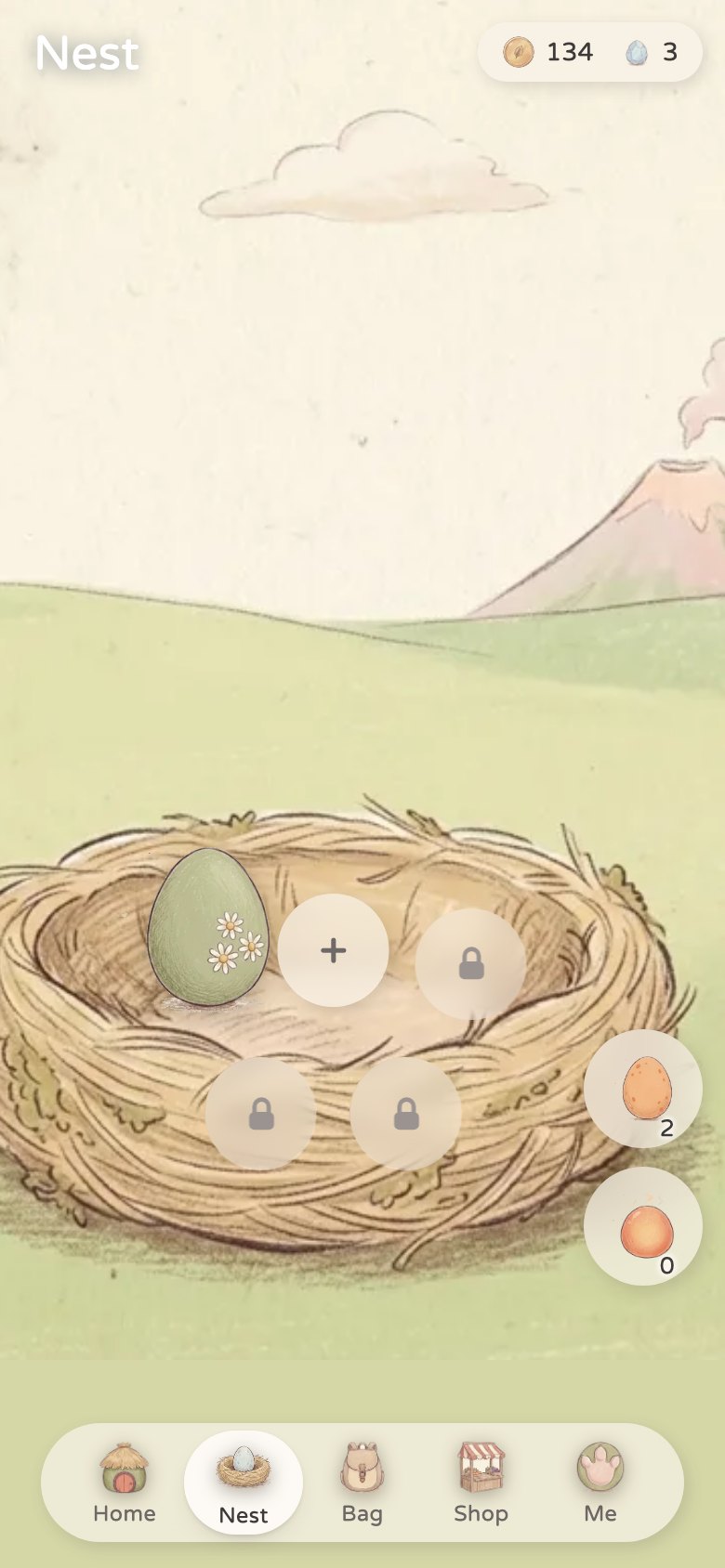
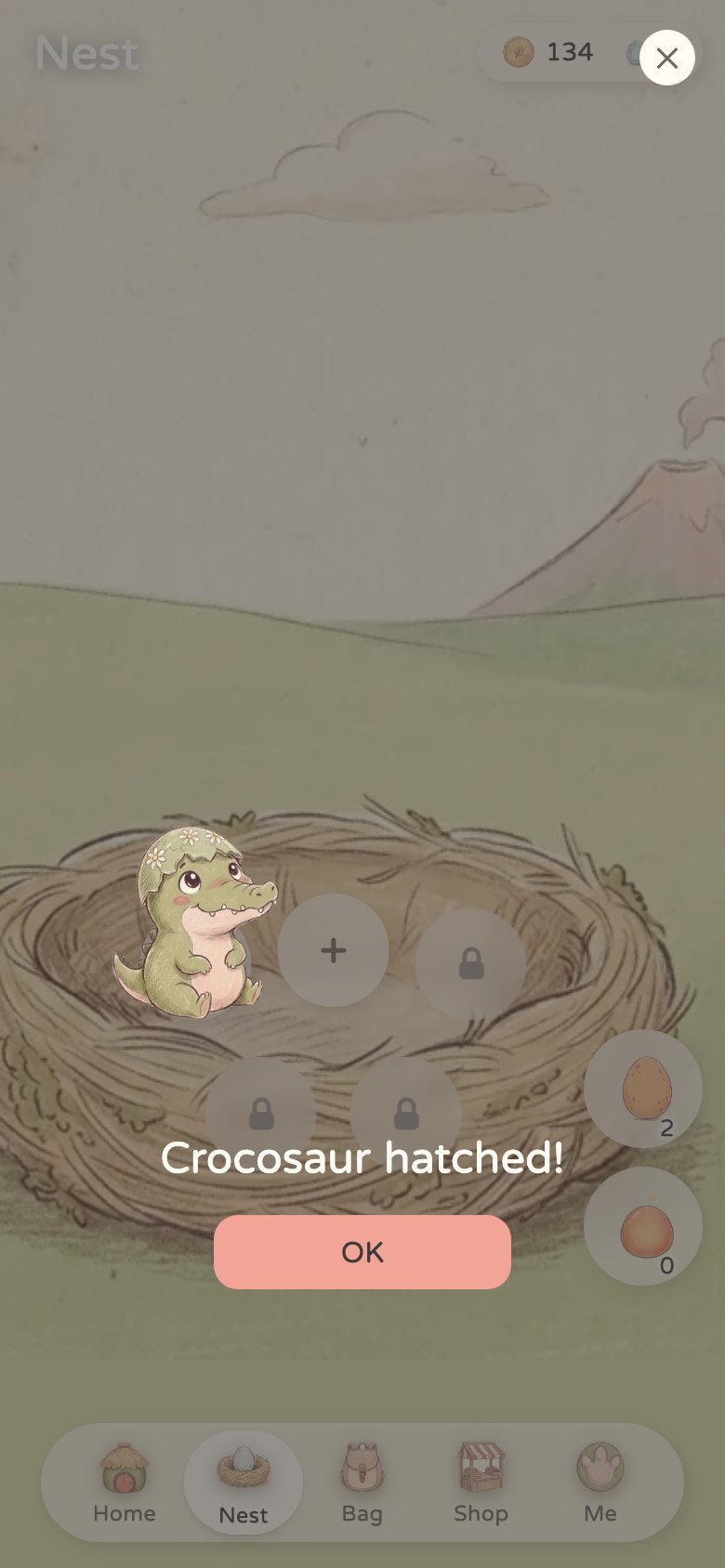
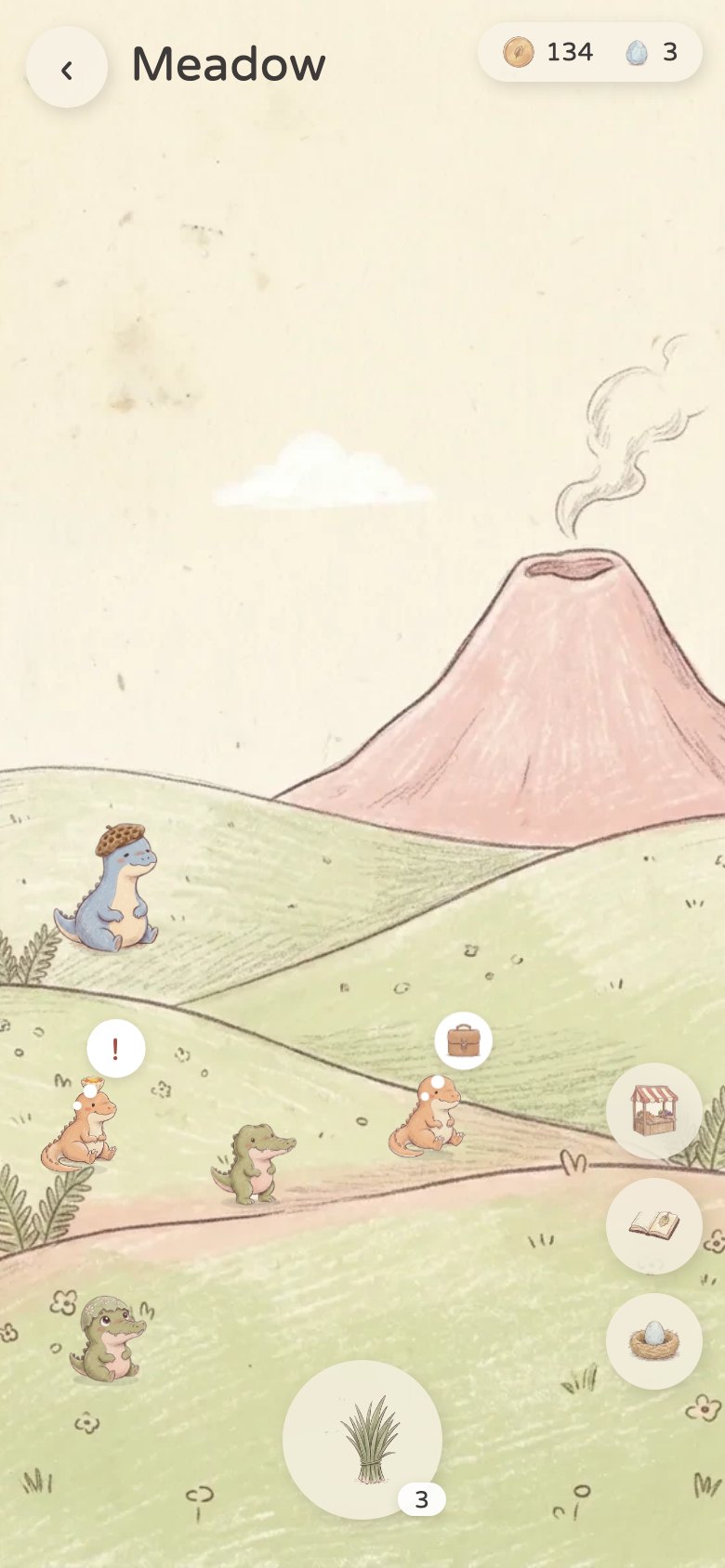
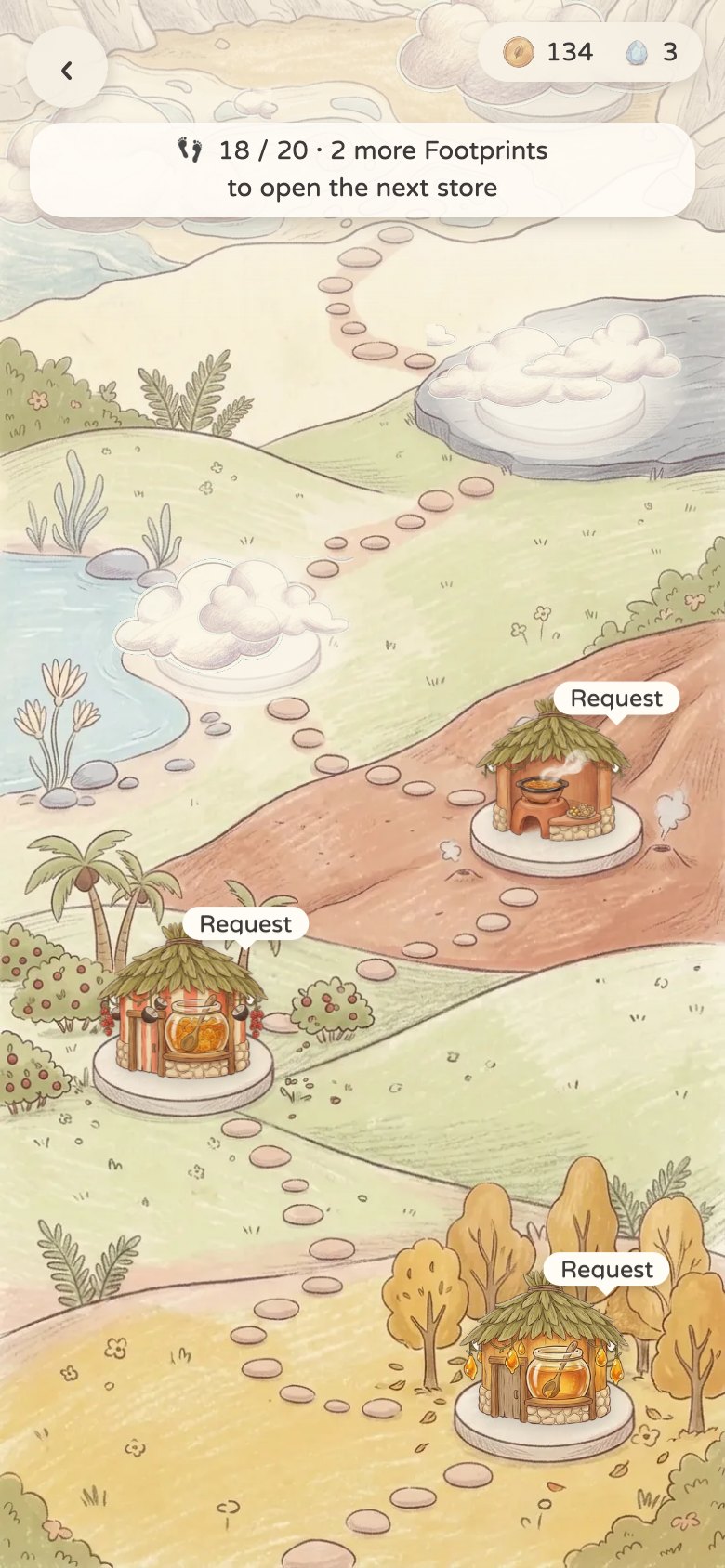
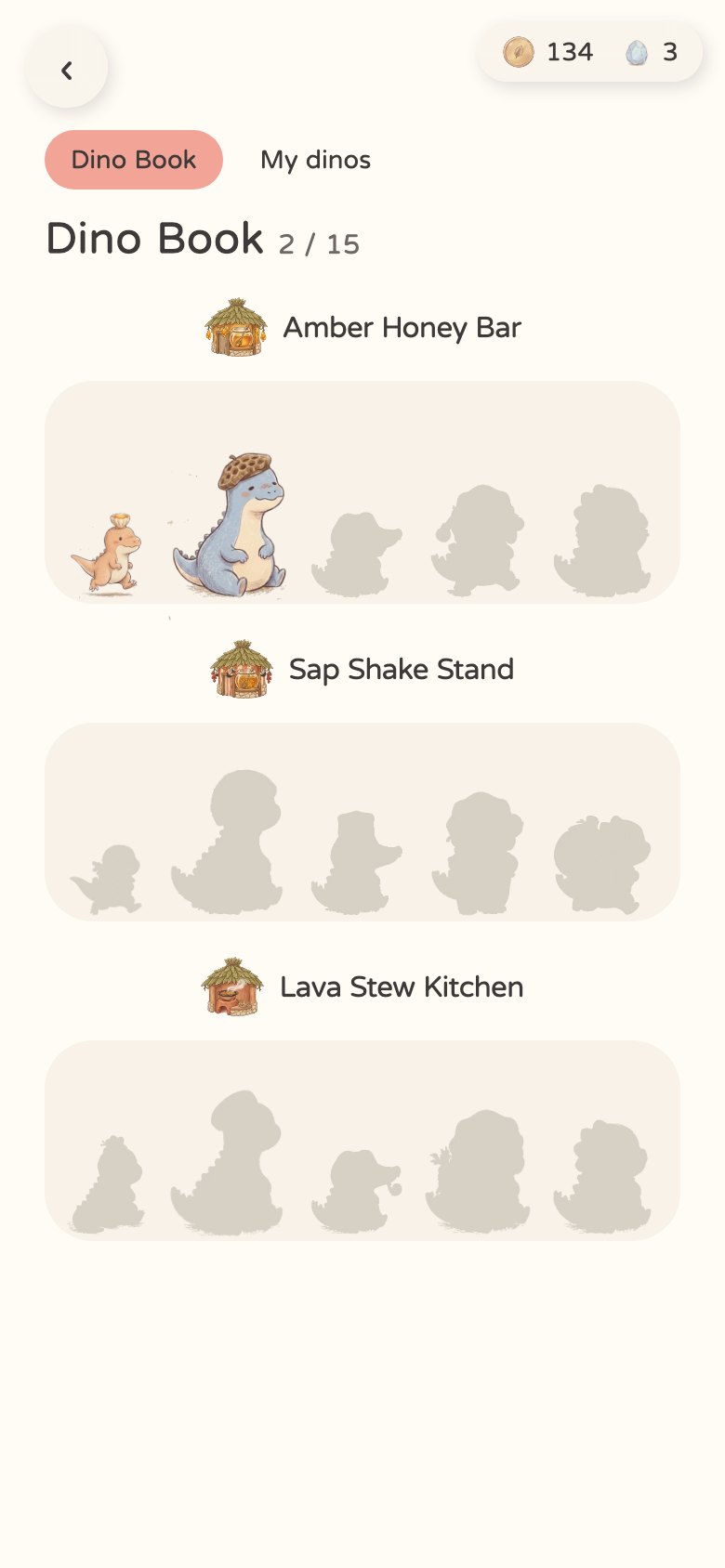
Answers earn coins, and scores move eggs toward hatching. Hatched dinosaurs live on a meadow, get fed, and go off to work at Cretaceous shops, bringing back collectible items for the collection book. The book has 50 slots across ten shops; five shops are open so far, so 25 slots can be filled today.
SolvesP2P3
Product decisions
Live generation over a fixed question bank
The first version rotated a small hard-coded bank, and the repeats were the main complaint. I switched to generating questions daily against a no-repeat history, with points to cover attached, so every day is new and grading has a clear bar.
SolvesP4
What paid currency can and can't buy
The economy has written rules. Paid currency can steer which series you work toward, but it can't buy the collectible itself. Progress only adds up. Nothing gets deducted or missed, and a collection stamp is never taken away.
SolvesP2P3
A scoped API instead of handing out the database key
The scheduled routines need to read and write practice data. Rather than putting the database service key in their prompts, the app exposes a few narrow endpoints behind their own revocable token. The key never leaves the hosting environment.
SolvesP4
Small motions that confirm progress
Finishing a question should feel like progress, so the app got five micro-interactions. Submitting squeezes the button into a circle, stamps a tick and bursts particles. One event moves today's task count (it rolls like an odometer), the week-calendar ring and the task card tint, so they always update together. The framework notebook fans out as a stack of six cards, the answer history snaps along a drawn timeline, and the bottom tabs switch with a circle reveal and a sliding pill. Everything respects reduced motion and animates only transform, opacity and clip-path. I skipped an inertia wheel on purpose: the native iOS date wheel is better.
SolvesP2
Analytics that keep answers private
The GA4 funnel follows the reward loop: sign_up, login, first_answer, egg_hatched and begin_checkout. It loads only on the production hosts, respects GPC and Do Not Track, and keeps Google signals and ad personalization off. No user ID, email or answer content is sent. UTM and social source tags survive the OAuth sign-in redirect, so a sign-up still shows where it came from. The privacy policy was updated in English and Chinese to match.
SolvesP2
No live voice or video mock interviews, for now
It's built solo on a limited token budget. Real-time AI voice or video interviews would eat that budget, so written practice comes first.
SolvesP1
No community feature, yet
Community is usually what makes people stick, and I believe it's very valuable. But today the users are me and my friends, and the scope is PM interviews only, so there isn't an audience to build a community with yet.
SolvesP2
Competitive landscape
Interview-prep tools are good at teaching and gamified-learning apps are good at bringing people back. Few do both for PM interviews.
| Tool | What it does well | Where it stops |
|---|---|---|
| Duolingo | The reference for gamified learning: streaks and rewards that bring people back daily. | Teaches languages, not how to answer an interview question. |
| Exponent | PM interview prep: courses, a large question bank, and mock interviews. | Strong content, but staying motivated day to day is up to you. |
| Final Round AI | AI mock interviews with role-specific questions and feedback. | Built around single sessions, with nothing that builds a daily habit. |
| Yoodli | AI roleplay practice with feedback on delivery: pacing, filler words. | Coaches how you speak more than what a PM answer should cover. |
HatchFellow's wedge is the daily habit: PM-specific questions with clear points to hit, plus a collection you only grow by practising.
Built with
Inside the product
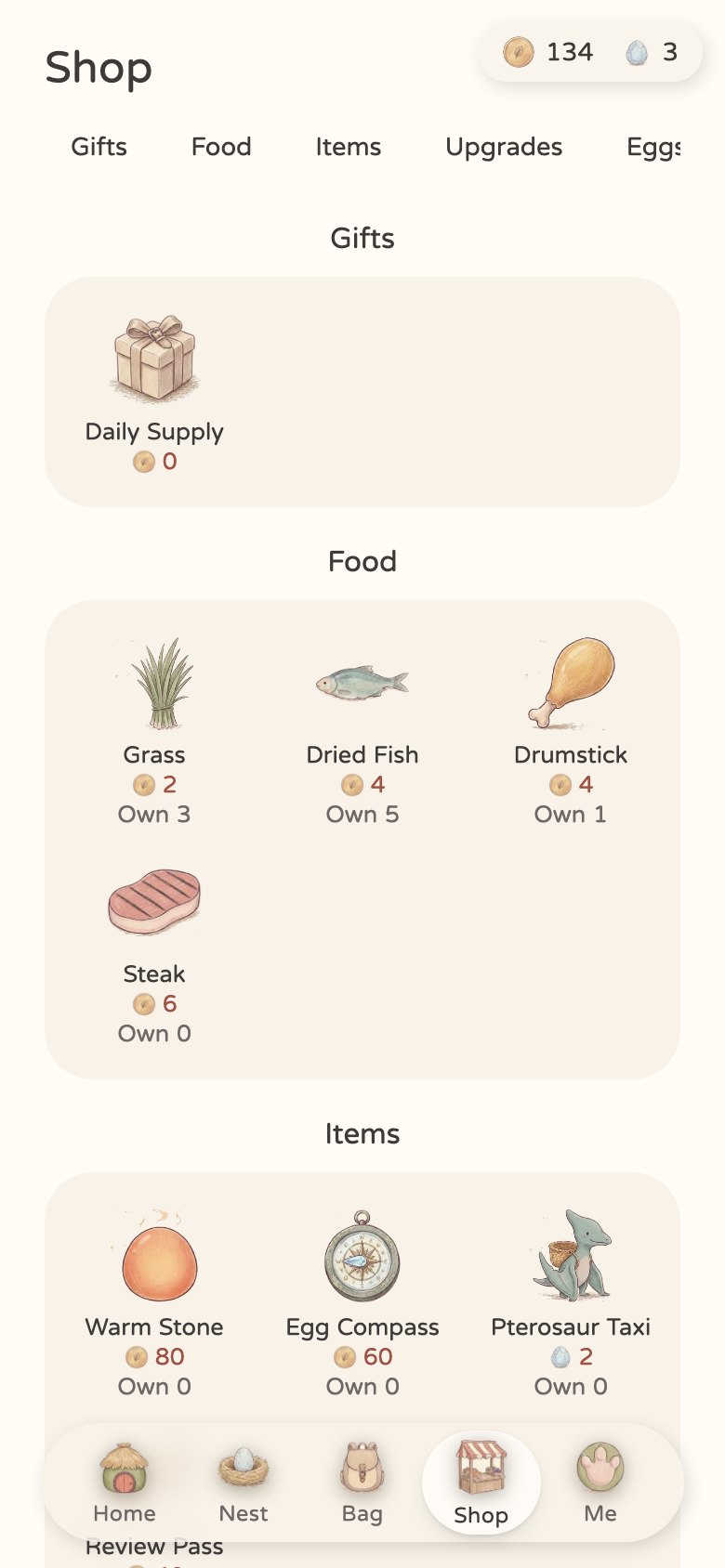
These are real screens from the prototype the live app was built from, shot with its final art. The answers and progress shown are sample data.
hatchfellow.com/en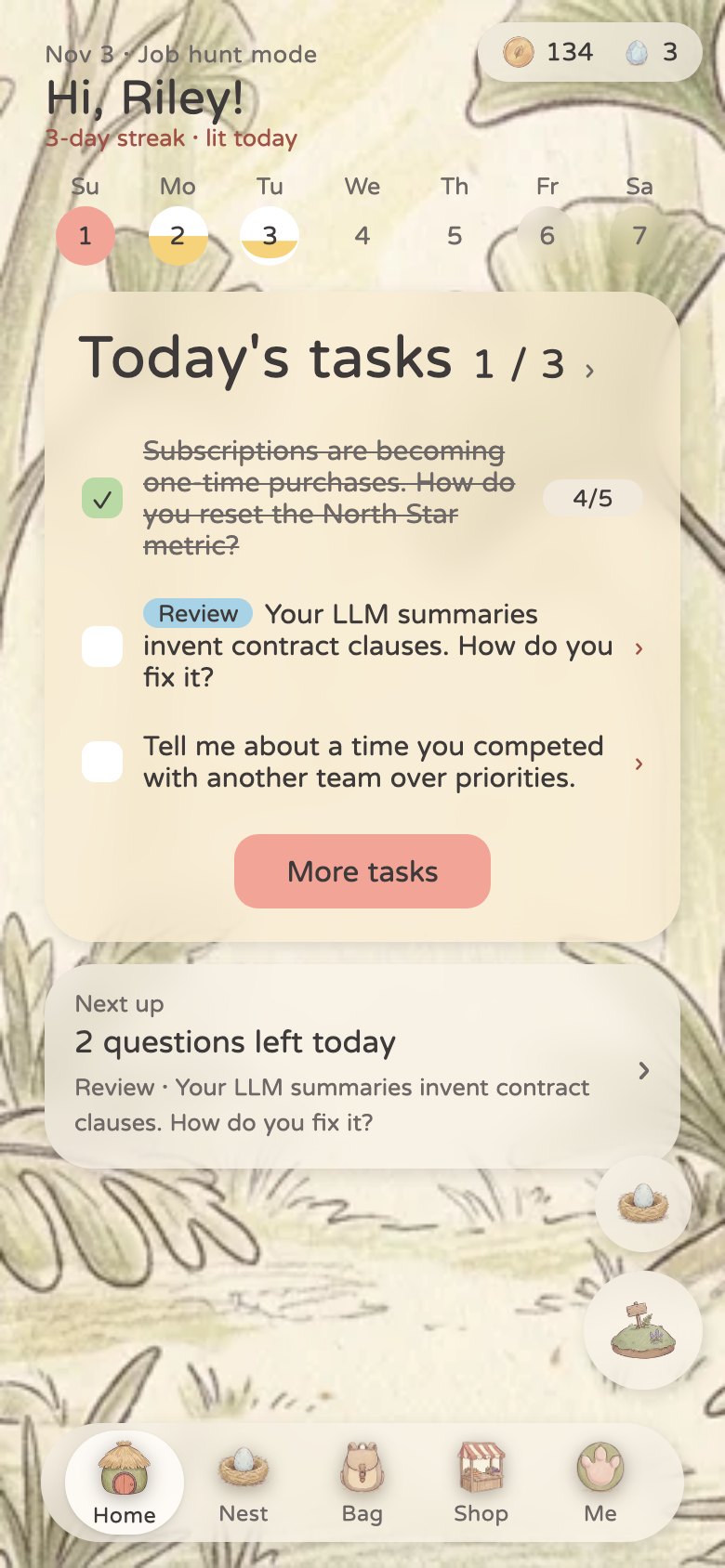
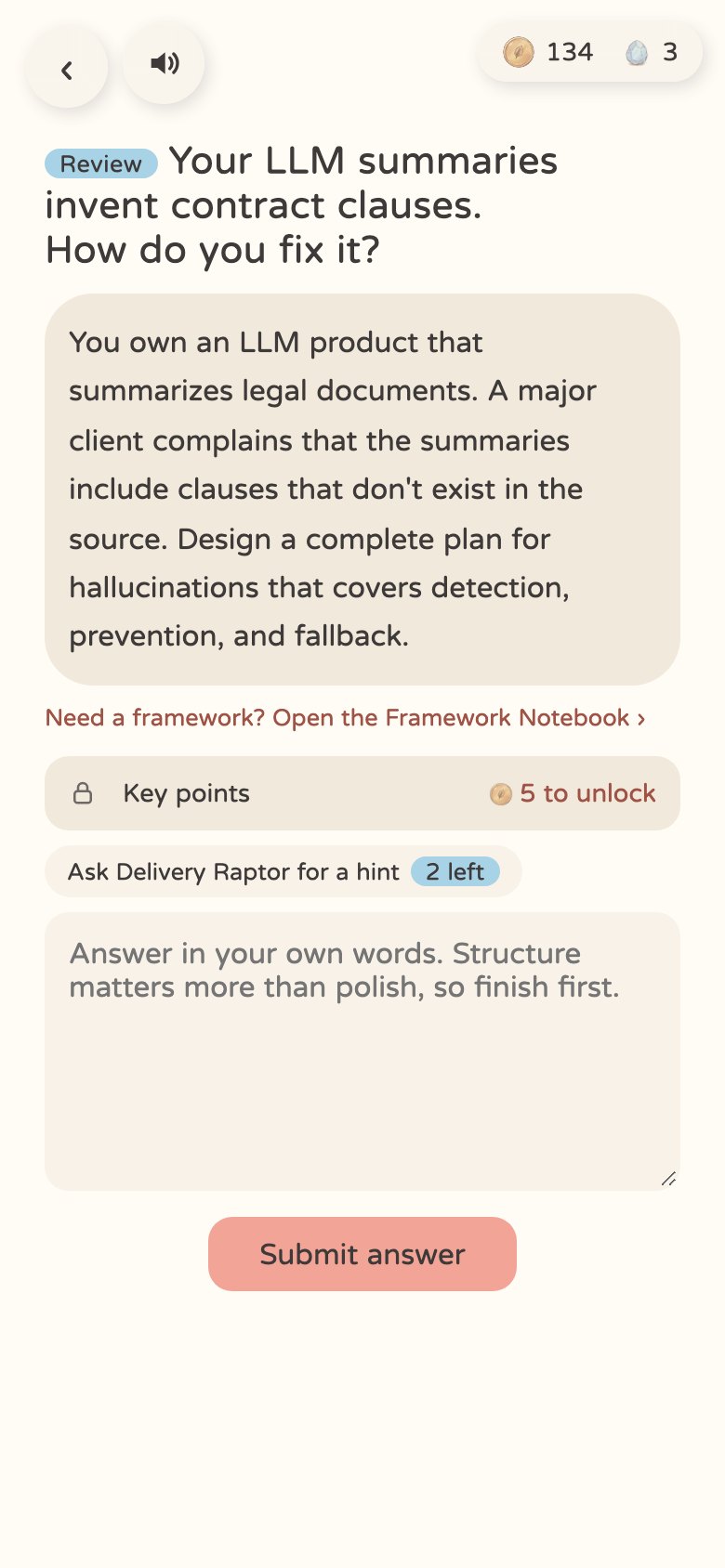
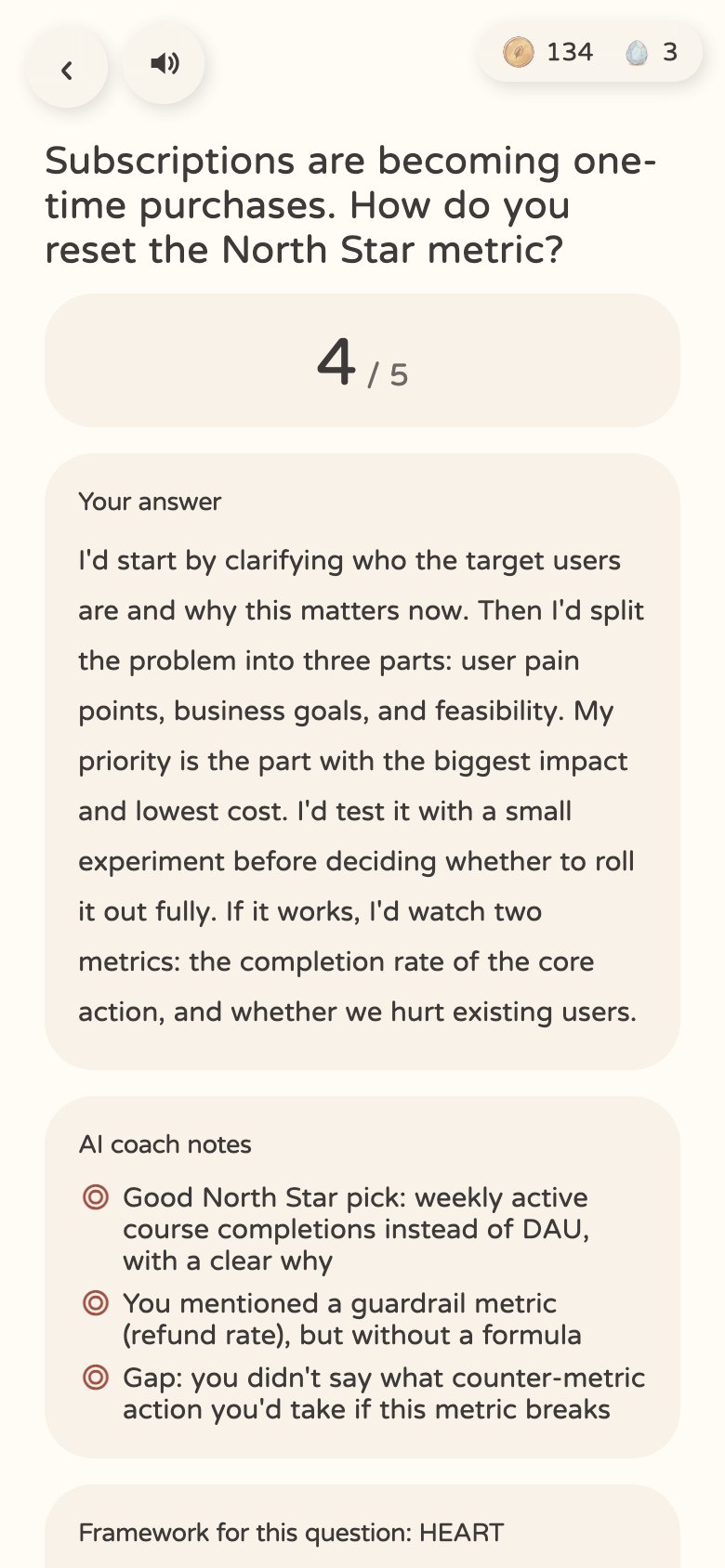
How I evaluated it
A dev smoke run, one run per item, of the four AI tools behind the app. T1 grades an answer point by point, T2 grades the reply to the coach's follow-up question, T3 writes the key points for a new question, and T4 translates questions into Traditional Chinese. The dev sets hold 62, 40, 30 and 30 items across happy, edge, adversarial and failure-recovery cases. The eval is organised around two boundaries: which rules only code may enforce, and where the cheaper model is good enough. Judge numbers are AI-calibrated, not human-labelled, and no held-out set has been run yet.
- Code checks: the hard boundary
- Rules that must hold every time are checked in code: language purity, a score computed from the points hit, no prompt leak, and the safety floor on adversarial input. Each is a yes-or-no question. A clever answer can talk a judge model out of a rule, but it can't talk a code check out of one.
- LLM judge: qualitative questions only
- Claude Opus judges what code can't measure, such as whether feedback is actionable and the tone kind and direct. A judge question is trusted only after it agrees with two blind AI labelers on different models. In this run most questions agreed on passes but saw too few failures to test false passes, and two did not clear the bar (T1 Chinese register, T3 translation match).
- Free tier on Haiku, Plus on Sonnet
- Scores land within 1 point on 91% of items, so the cheaper model is good enough to score. Haiku is weaker on feedback shape (72% vs 100%) and on asking a single follow-up question (76% vs 89%). Those are format rules. The one-question rule gets a deterministic server-side check, and feedback shape gets a tighter prompt, so free users stay on the cheaper model.
- T3: the boundary moved to code
- The judge passed nearly every key-point set (96% and 100%). The code checks found that only 33% kept every point under 15 words and only 22% named the subject. For key points, the code checks are the boundary, and a judge pass is not enough on its own.
- Language purity (Chinese)
- The one hard rule that missed its bar. The code check scored T1 and T2 between 92% and 97% against 100%. Chinese feedback picked up stray English words, and Simplified characters slipped in when the player's own text was quoted.
- Safety held
- Failure recovery passed 18/18. The adversarial floor held 100% on T1 and T2, and the prompt never leaked. Every rule enforced in code for safety came through.
Next fixes (not built yet)
The run points to three fixes, none built yet. First, a deterministic formatting pass for Chinese output on the server: spaces between Chinese and English or numbers, Simplified characters mapped to Traditional, and a log for any field under 30% Chinese characters. Second, a T3 rule that every key point names its subject (the product, company, metric or constraint) and stays under 15 words, checked by the validator with its existing retry. Third, a one-question rule for follow-ups, where the server keeps only the first question if the model asks two.
Outcome
Live at app.hatchfellow.com and open to anyone with a Google account. Answers are written in the app and graded point by point on the server by Claude Haiku or Claude Sonnet, depending on the plan.
The app was built from a working prototype with its final art in place: in-app answering, onboarding, the dinosaur meadow, the egg nest and hatching, a street of shops where dinosaurs work, the shop and the collection book, all in the warm hand-drawn style.
What's next
- Open it to more roles beyond PM. Onboarding already lets people ask for theirs.
- Add community once there's an audience to build it with.